Pantry organisation
Create readable external labels on compatible glass or rigid kitchen storage jars, keeping adhesive transfers away from food-contact surfaces.
Custom UV DTF transfers for storage jars from DTFX Premium Transfers. Print matching pantry, craft-room and home-organisation labels for suitable smooth glass, acrylic or rigid containers. Compare A4, A3 and 580mm × 1000mm sheet formats, prepare readable lettering and learn how to apply hard-surface decals safely.
UV DTF transfers may work on compatible smooth, dry and clean hard surfaces. For transparent jars, choose lettering that stays legible against changing contents. For all jars, check the exact material, coatings and curvature instead of relying on the product name alone.
Create readable external labels on compatible glass or rigid kitchen storage jars, keeping adhesive transfers away from food-contact surfaces.
Name smooth jars used for beads, buttons, sewing accessories and other craft materials. Size the text for the actual contents behind clear glass.
Prepare approved names for suitable jars holding cotton pads, household accessories or other items; check humidity and cleaning conditions.
Use small personalisation or themed decorative motifs on suitable rigid glass or acrylic exteriors, testing the actual blank first.
Apply legally usable business logos to compatible rigid containers for presentation or display; don’t assume decorative decals satisfy required labelling.
Arrange several consistent names, borders or patterns on one gang sheet while using different widths for large and small jar sizes.
Choose the size that matches your finished artwork dimensions and the number of labels. An A4 or A3 format may be right for a few jars, while a metre sheet offers more space for different designs. These are transfer-only options, not finished storage jars.
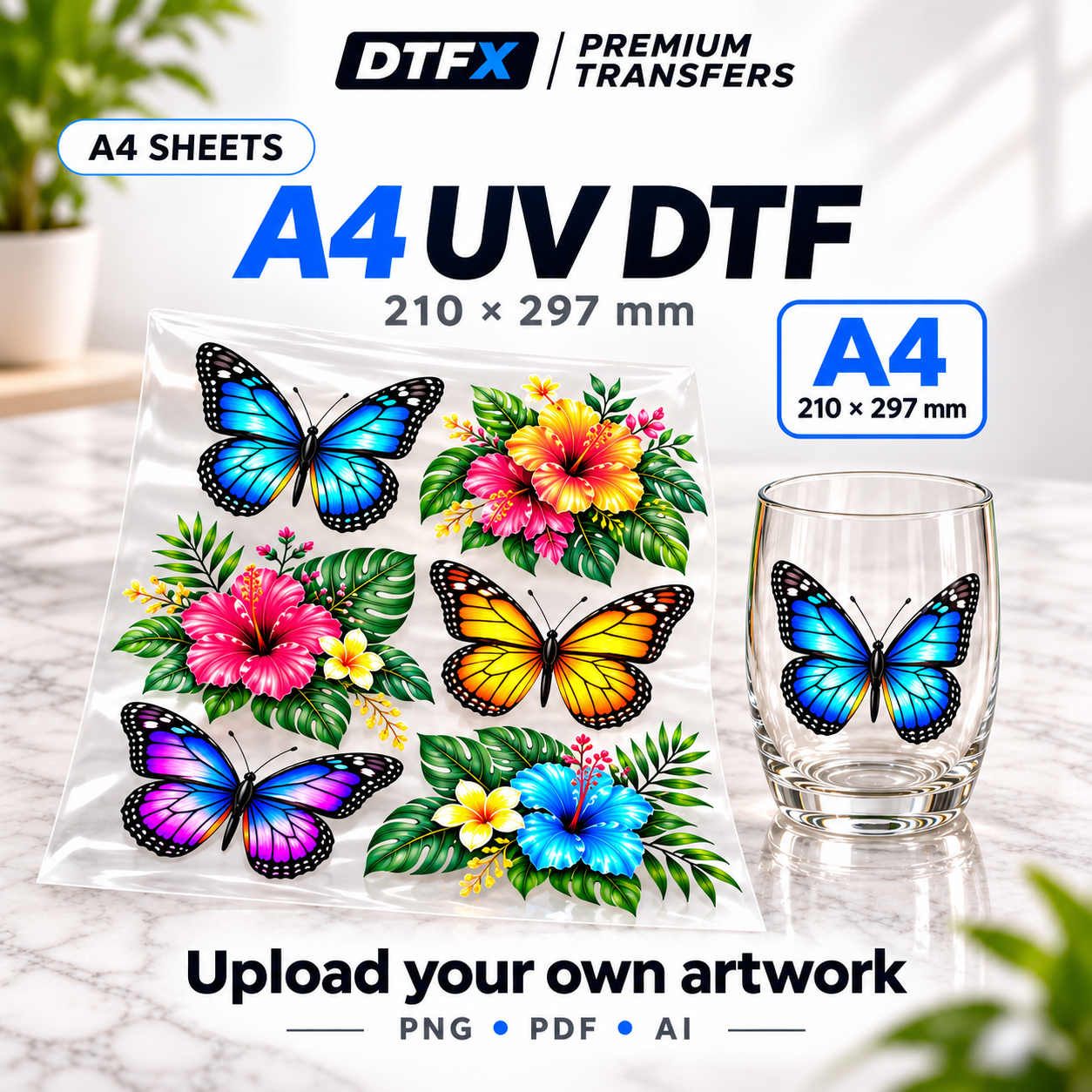
A4 (210 × 297mm) is useful for a few smaller jar labels or a sample to check how lettering looks on the actual blank.
Browse A4 sheets →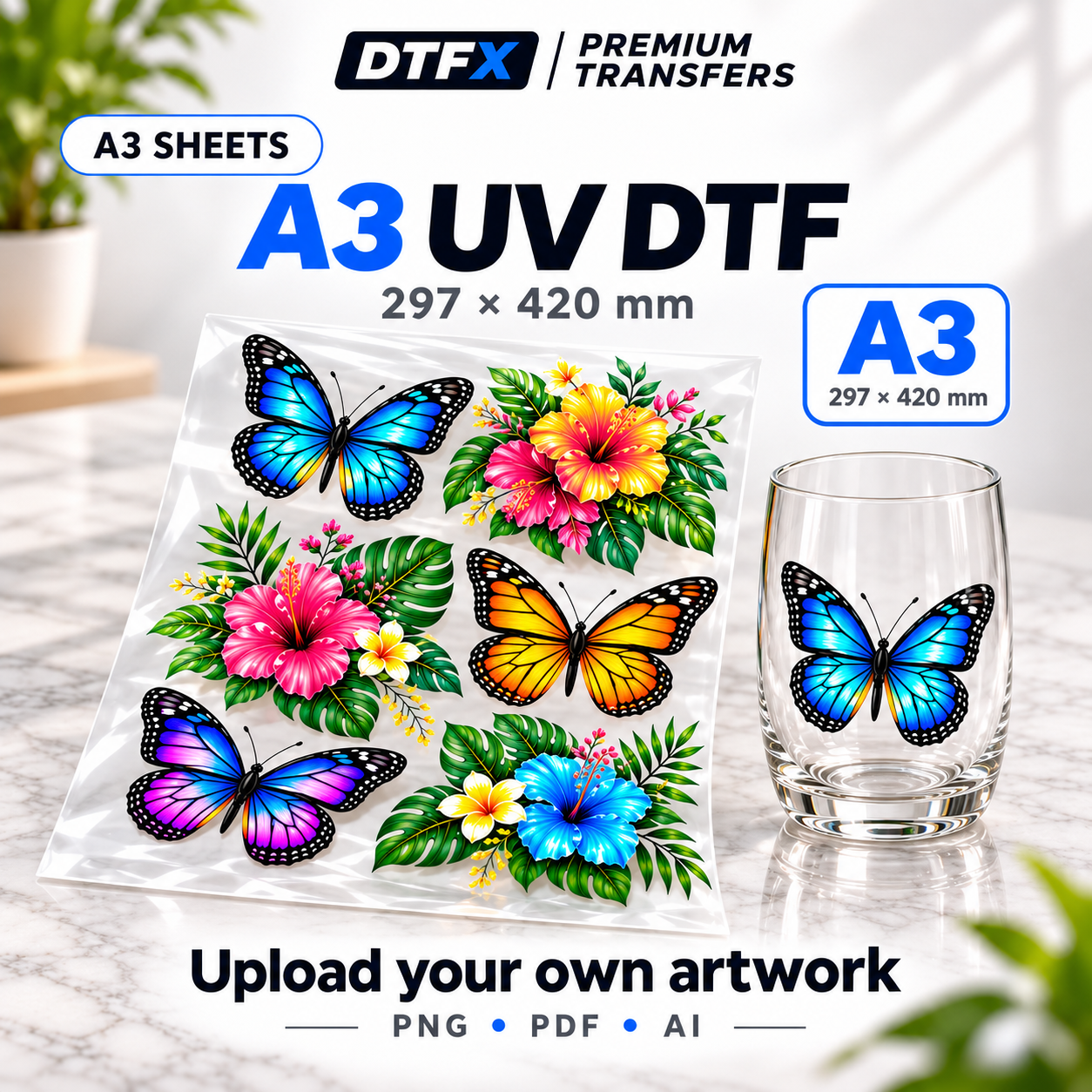
A3 (297 × 420mm) gives room for several approved names or larger motifs, where they fit with cutting gaps.
Browse A3 sheets →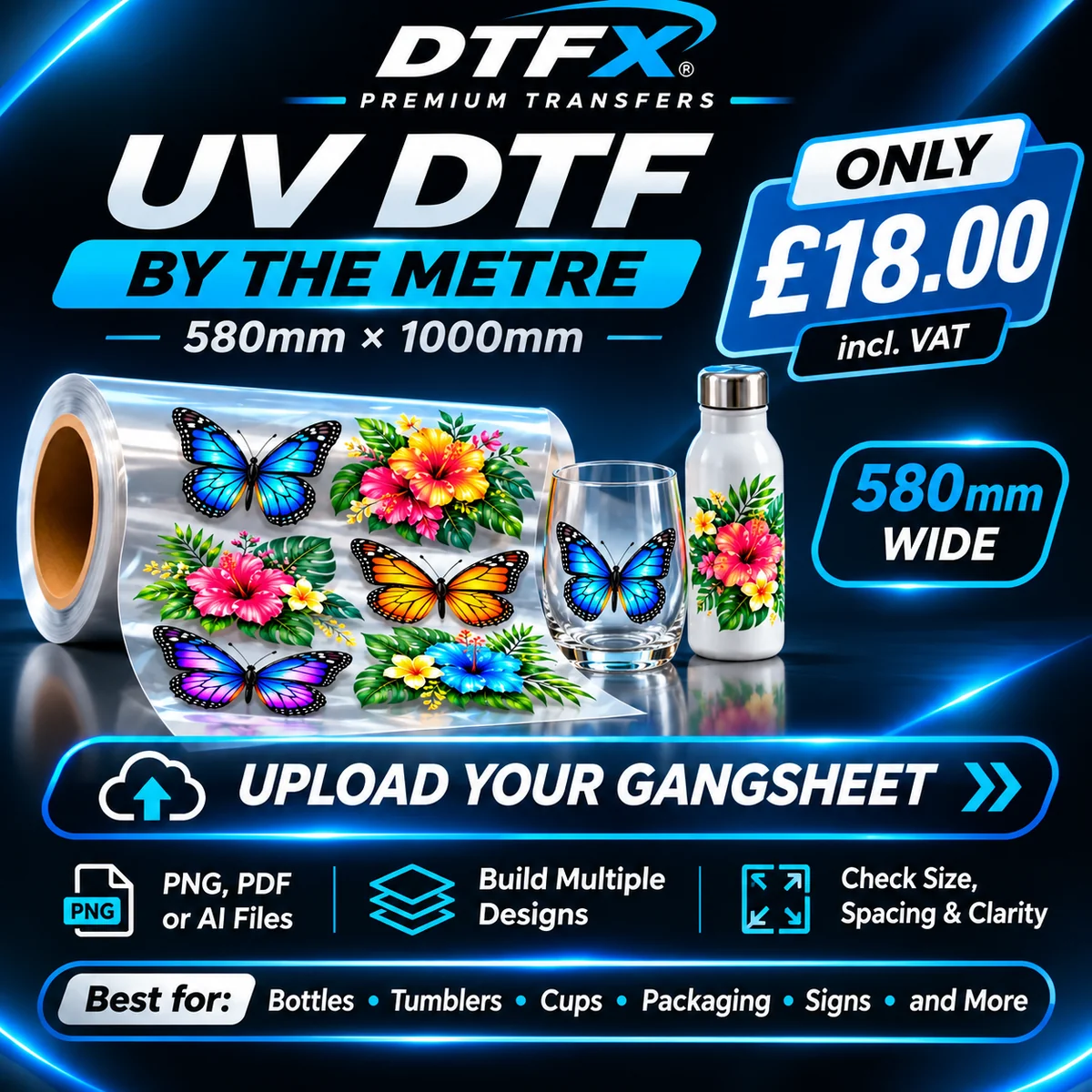
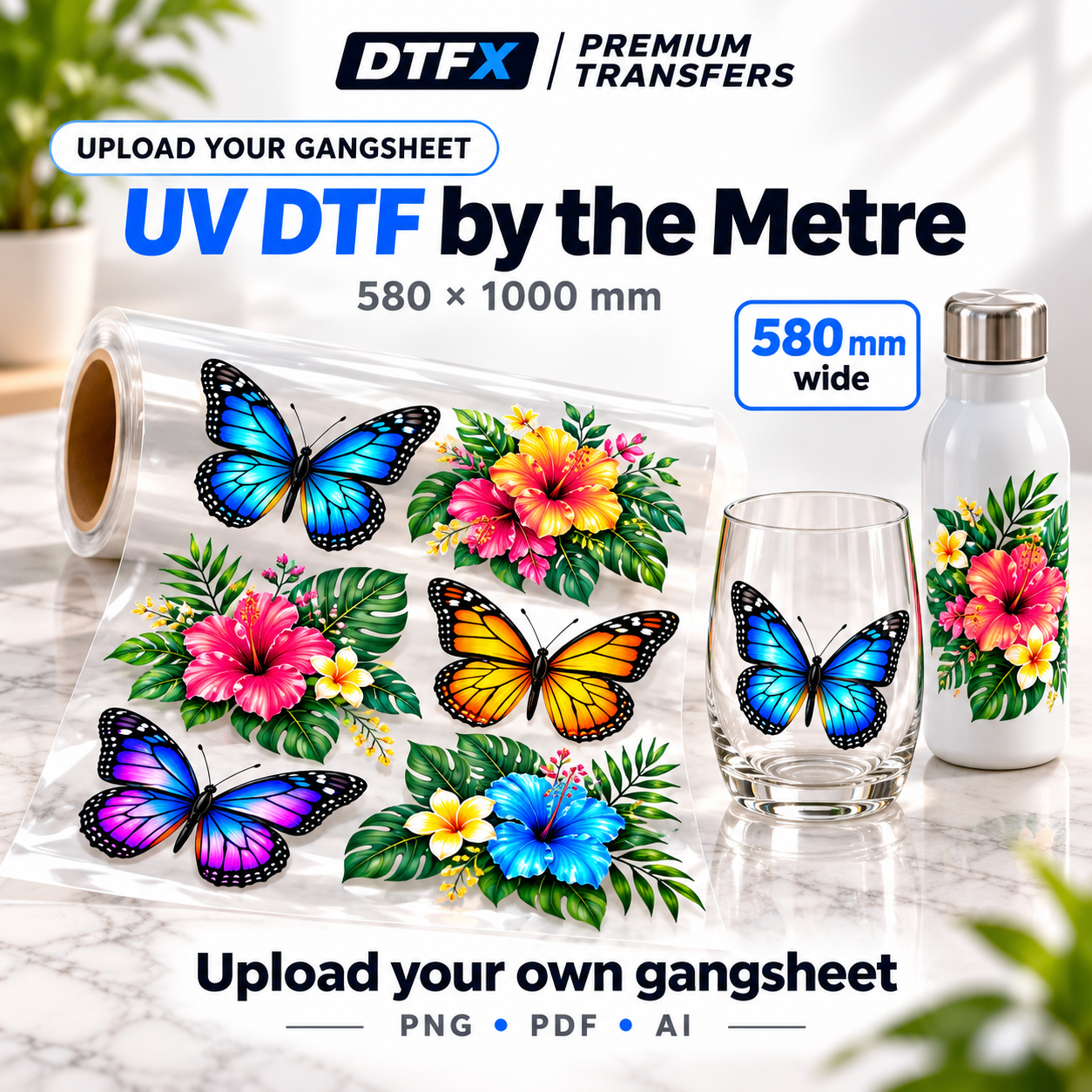
The 580 × 1000mm layout accommodates a variety of custom jar names and logo sizes arranged as one ready-to-print file.
Upload a metre sheet →UV DTF adhesion is material- and finish-dependent. The following considerations help you plan a sample, not certify any particular jar as compatible.
| Jar surface or feature | Check before applying | Potential issue |
|---|---|---|
| Smooth clear glass | Surface cleanliness, visible contents and print placement. | Small lettering may have poor contrast or lift on steep curves. |
| Frosted or coated glass | Surface texture, coating adhesion and cleaning compatibility. | Texture or treatment may affect how the UV DTF film bonds. |
| Rigid acrylic | Actual acrylic finish and coating or polish on the exterior. | Some cleaners can damage the finish or affect the adhesive. |
| Rigid plastic storage tub | Resin type, texture, flex and any mould-release residue. | Some plastics, notably PE and PP, can be difficult to adhere to. |
| Curved shoulder or clasp lid | Available flat area, threads, seals and repeated hand contact. | Wrinkles, edge lifting or abrasion with opening and closing. |
| Jars cleaned with high heat | Intended washing, sterilising or heating conditions. | Do not assume durability in dishwashers, microwaves or boiling water. |
Identify the exact glass or rigid jar, confirm surface compatibility and measure the exterior decoration area.
Create each approved jar label at its finished size. Check spelling, font readability, contrast and artwork rights.
Choose A4, A3 or a 580 × 1000mm gang sheet, leave cutting gaps and upload the completed file.
Clean safely, dry thoroughly, apply and burnish a test transfer, then check adhesion and the jar’s actual care needs.
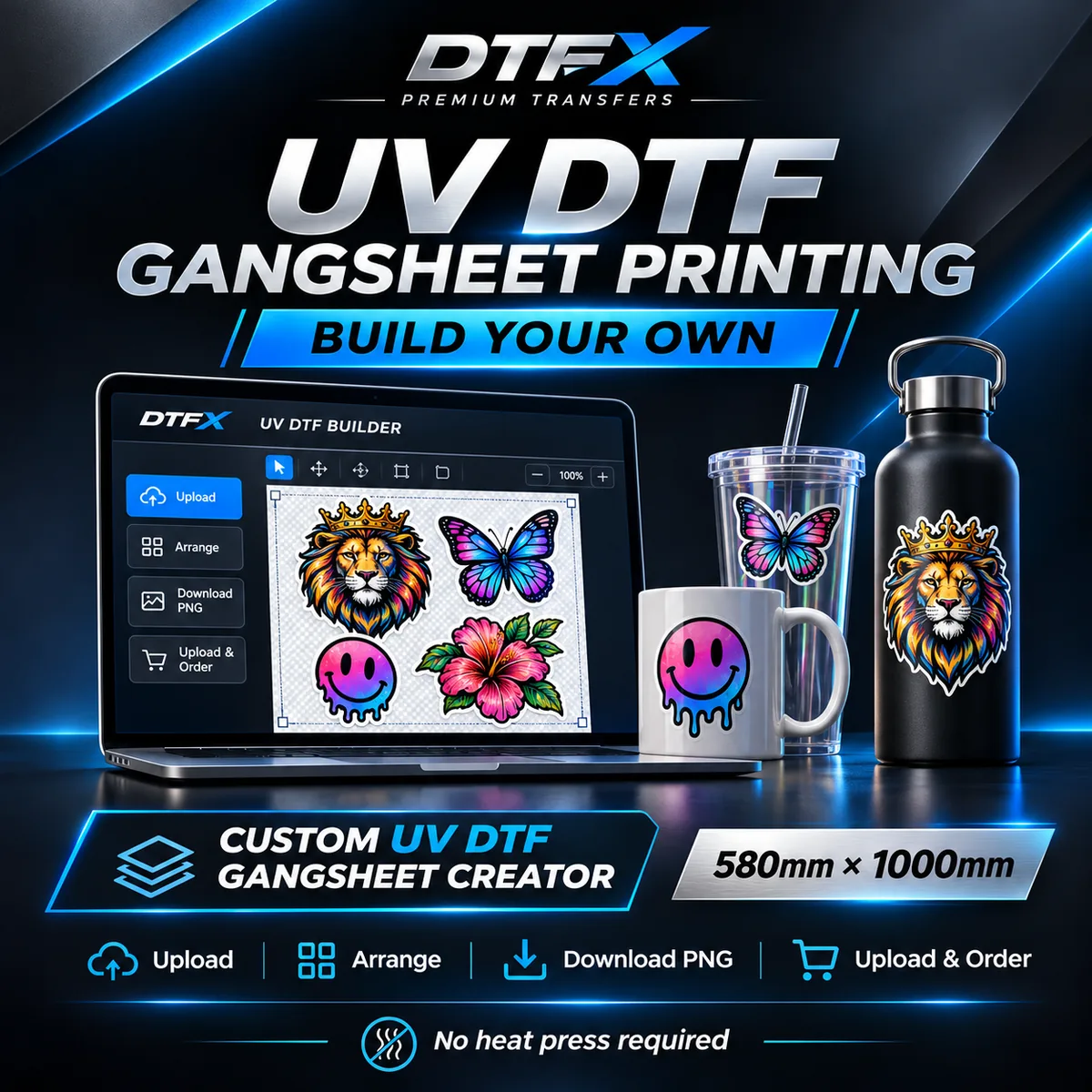
Arrange separate prepared designs at their actual printed sizes, duplicate matching labels and export the completed layout. Upload the final file to the relevant DTFX product. The creator itself does not automatically complete an order.
The images below are DTFX media-library transfer examples; they do not show finished or included storage jars. Use your own tested jar blanks and approved label artwork when ordering.
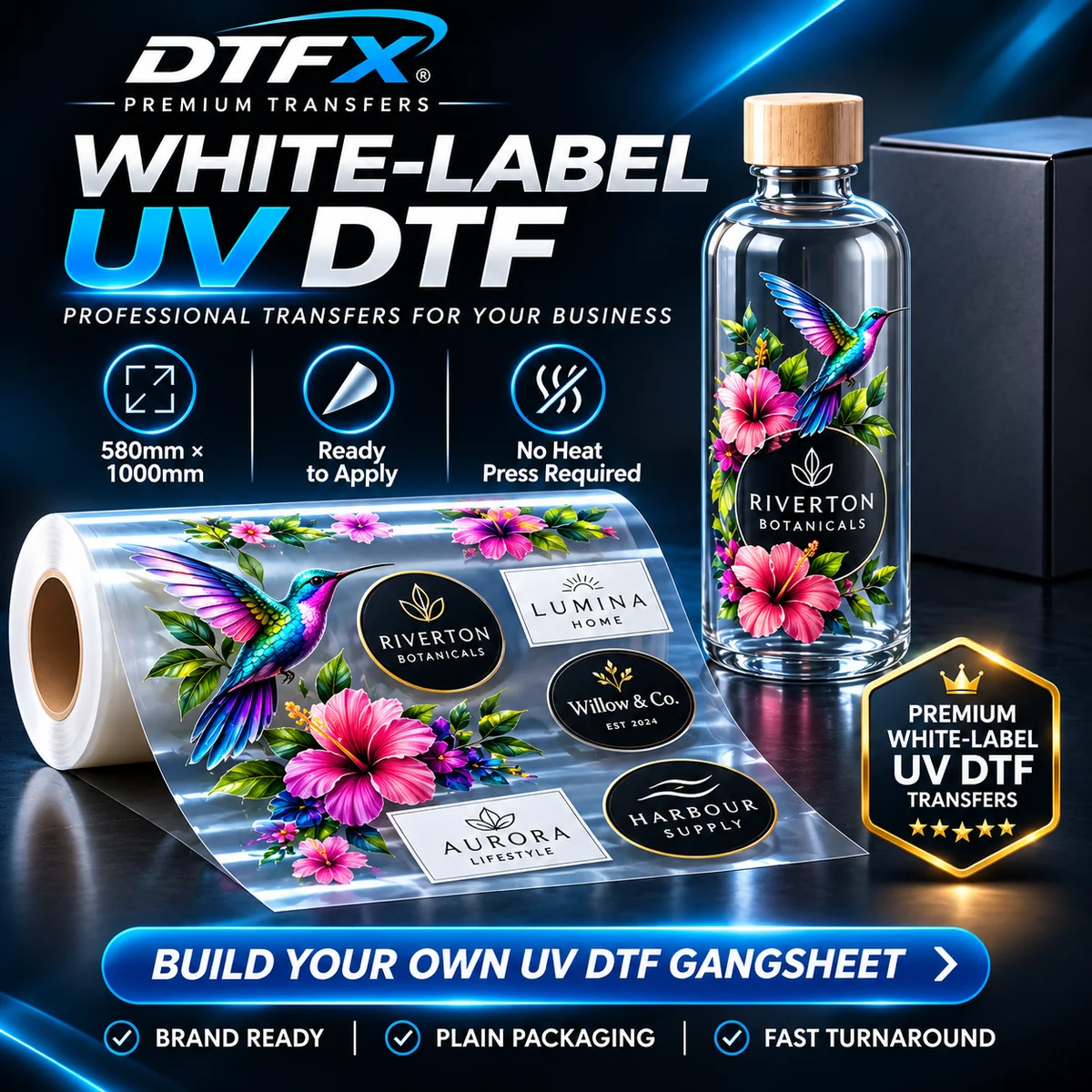
UV DTF is for compatible hard surfaces and does not require a garment heat press. Follow the film’s supplied directions and work on a smooth, clean, completely dry jar exterior.
Some smooth clean glass jar exteriors can be suitable, depending on their finish and the decal’s instructions. Test the exact jar, and keep the transfer off internal and food-contact surfaces.
It may be difficult to read against pale contents. Check the label design against both the empty jar and what it will contain, and choose enough contrast and text size.
Possibly, but the coating, resin and surface treatment matter. Some plastics, particularly polyethylene and polypropylene, may resist standard adhesives. Test the actual blank.
Yes. Supply each label as a prepared, finished-size design within the sheet, with cutting gaps. A typed list of names alone is not a print-ready artwork file.
DTFX’s upload-your-own metre sheet measures 580mm × 1000mm. The full layout should fit those physical dimensions, with adequate spacing, and must not be mirrored.
No. UV DTF adhesive transfers are applied to compatible hard surfaces with backing and carrier film, using the supplied burnishing and peeling instructions.
Do not assume either. Follow film-specific aftercare and avoid food-contact areas. Decorative UV DTF labels do not certify the entire jar as suitable for food use or high-temperature cleaning.
No. The linked DTFX UV DTF listings supply printed transfers only. You provide your own compatible jar blanks and apply the decals following the recommended instructions.
Measure your blanks, approve your jar label artwork and order print-ready UV DTF transfers from DTFX Premium Transfers.